


Go to designs
CS 02 · Onboarding & Listing Creation for AWS Marketplace
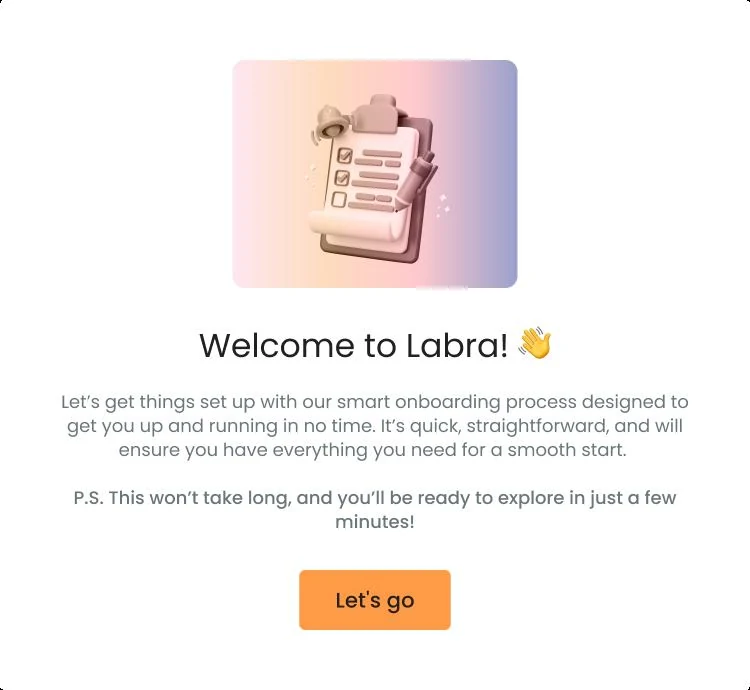
Welcome to Labra onboarding card

How a 2–3 month, support-heavy AWS listing process became a self-serve workflow completable in under a week.

My Role

End-to-end product design and ownership. Sole designer and first design hire. Problem definition, system architecture, interaction design, and final execution across two years of continuous iteration. Worked directly with founders and PMs on scope, with dev and QA on every shipped surface, and with users on every iteration. Built the design system from scratch, then mentored juniors into contributing as the team grew.
The Problem

AWS Marketplace listings took 2–3 months, three internal teams, and revenue lost every day in between.

Getting listed on AWS Marketplace took 2-3 months of back-and-forth between the customer, CS, PMs, and developers. From support tickets, customer calls, and ISVs actively trying to create listings, the same patterns kept surfacing.

01

Missing prerequisites users didn't know existed

02

AWS terminology with no in-context explanation

03

Validation failures appearing only at the final step

04

Endless loop between customers, CS, and the product team.

The workaround: send a long external form, translate the data internally, manually create the listing on AWS. CS sat with customers for days. PMs attended every call. Developers explained integration requirements live. The product team kept teaching CS what to do.

What couldn't change

AWS rules

Schemas, validations, and compliance requirements were fixed.

The cost of errors

Rejections didn't just frustrate users. They blocked revenue.

Multi-role reality

No single user ever had everything needed to complete a listing alone.

Multi-cloud future

Azure and GCP support was coming. Nothing could be AWS-specific in logic or language.

This did not scale.

Before 2-3 months for total process.
  1. CS team

    External form sent to customer

    Long, unstructured questionnaire sent via email. No guidance on AWS-specific requirements.

  2. CS + PM + Dev

    Back and forth calls.

    Missing prerequisites, unclear fields, AWS jargon, all handled on support calls.

  3. Product team

    Labra team manually creates the form.

    Data translated internally. Listing created on AWS by Labra staff. Customer waiting throughout.

  4. Dev + CS

    Back and forth on rejections

    AWS rejects listing. Missing fields, compliance issues, cycle starts again.

  5. Listing finally goes live after 2-3 months.

    Customer successfully listed. After 2 to 3 months of back-and-forth and heavy team involvement.

And the cycle repeats. Rejected listings sent the whole back-and-forth straight back to the start.
CS team spent days, sometimes weeks on calls with each customer guiding them through requirements they didn't understand.
Product Managers and sometimes developers were mandatory participants on customer calls. Constantly teaching CS what to do for each new case.
The Customer! Waiting. Confused by AWS jargon. Getting rejected without clear reasons. Unable to proceed independently.

This is how it looked at the end.

After Under 1 week
  1. Customer

    Signs up on Labra

  2. CS

    Kickoff call with CS

    One-time onboarding call. Product walkthrough.

  3. Customer

    Self-serve onboarding

    Completes steps. Prerequisites upfront. Inline help.

  4. Customer

    Creates listing

    Fills listing. AI drafts copy. Inline validation.

  5. Listing goes live

    Live on AWS Marketplace.

CS: A few hours/week across all customers
PM: 0  Dev: 0
Who Uses It

There was no single primary persona. Each stakeholder had a specific job and none of them acted alone.

CP
Persona 1

Cloud Partner Manager

Cloud Ops
Who they are

Owns the end-to-end process of getting cloud partners live on marketplaces. They coordinate partner onboarding, create and validate product listings, and manage the full offer lifecycle across AWS, Azure, and GCP. Highly comfortable with cloud consoles, automation tools, and dashboards.

Goals

Successfully onboard partners and get their products live on marketplaces, ensure listings are compliant and optimized for discoverability, and manage offers from creation through fulfillment and renewal.

DC
Persona 2

DevOps / Compliance

Who they are

Ensures cloud marketplace listings meet internal security policies and regulatory requirements. Reviews IAM roles, validates CloudFormation deployments, and flags compliance blockers before listings go live. Strong command of cloud infrastructure, DevOps, and security standards.

Goals

Validate IAM and infrastructure setup across cloud listings, ensure compliance with security and legal requirements, and track review and approval status across marketplace onboarding checklists.

CA
Persona 3

CRM Admin

Who they are

Manages the technical integration between Labra and CRM systems like Salesforce or HubSpot. Handles user provisioning, access control, environment configurations, and data integrity. Comfortable with APIs, authentication methods, and CRM admin tools, and can troubleshoot issues independently or with support.

Goals

Ensure seamless CRM-to-Labra data sync for account and opportunity data, manage user permissions and access control, and minimize friction for sales teams relying on the integration.

MG
Persona 4

Marketing & Growth Ops

Who they are

Owns the content and performance of marketplace listings, writing product copy, aligning messaging with brand and GTM strategy, and monitoring listing engagement. Understands marketing flows well but is not deeply versed in cloud infrastructure or marketplace mechanics. Needs guided workflows.

Goals

Publish and maintain listing content accurately, ensure brand consistency across partner channels, drive lead generation through optimized listings, and monitor visibility and engagement of published assets.

The Solution

Two years of this loop. 100 plus screens.

The flow wasn't designed once. It evolved as AWS rules changed, new listing types were added, and customers revealed new friction points. Research was continuous because customers were continuously onboarding. Every new user surfaced patterns, rejections, and jargon gaps that fed directly back into design.

Continuous research
  • CS ticket patterns
  • Customer calls + ISV admin feedback
  • AWS rejection logs
  • Jargon confusion points
Synthesis
  • Recurring rejection reasons
  • Missing prerequisites
  • Terminology gaps
  • Role-based handoff failures
Design
  • Continuous iterations
  • Inline validations
  • Contextual help system
  • Progressive disclosure rules
Ship & observe
  • Customer feedback after live
  • CS load tracking
  • Rejection rate monitoring
  • New pattern surfacing
The design system

I built Labra's first design system as the company's first designer. Every screen in this case study sits on top of it.

01Reducing cognitive load

Reduced cognitive load as much possible.

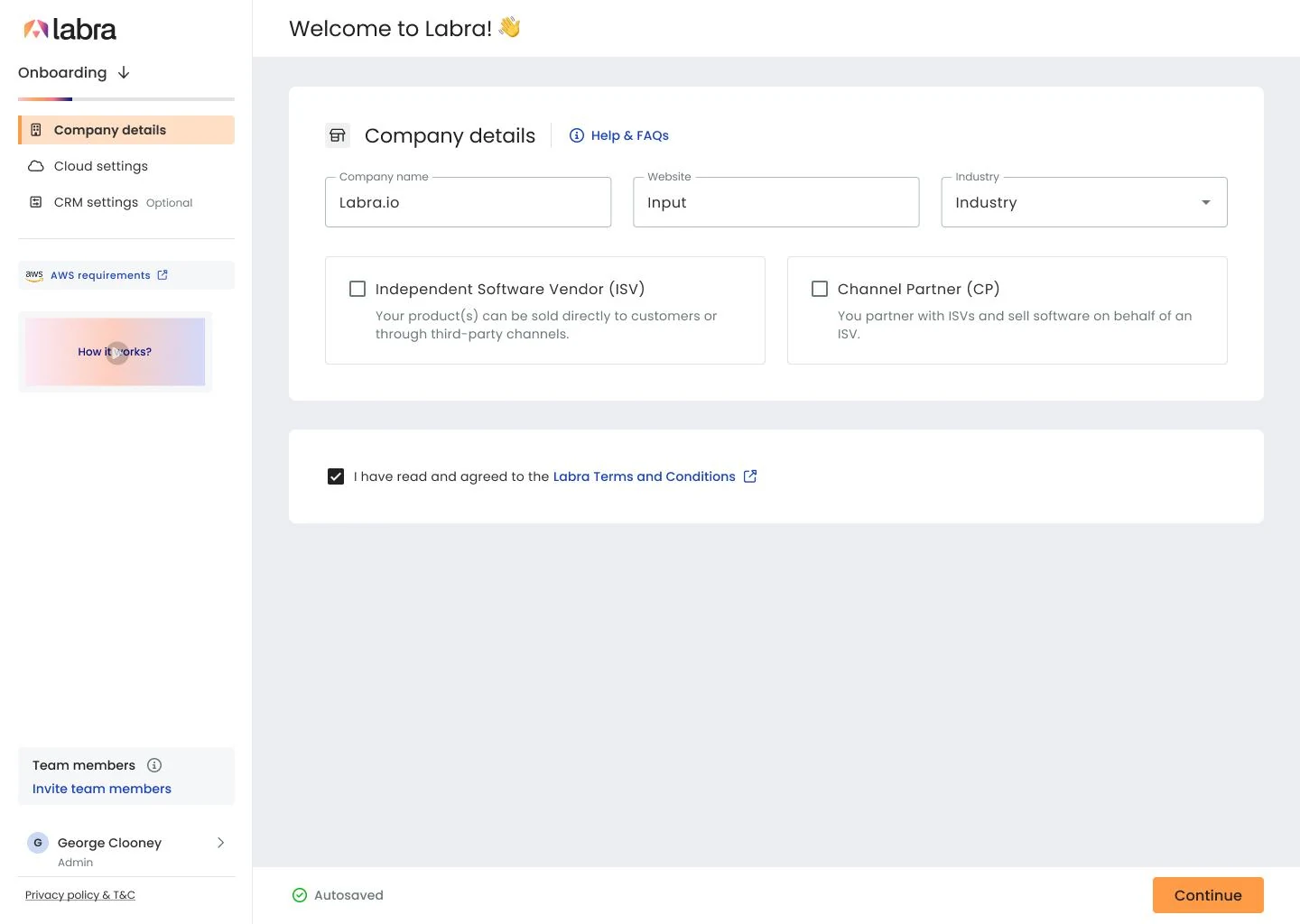
Onboarding — company details with a guided stepper and sidebar help
01

Progressive disclosure

Show only what's needed at each step. Delay AWS complexity until it's required.

02

Guided step-based workflow

Completed, active, and pending are visually distinct, users always know where they are and what's next.

03

Contextual help in the sidebar

Video tile sits alongside the form. Available all the time.

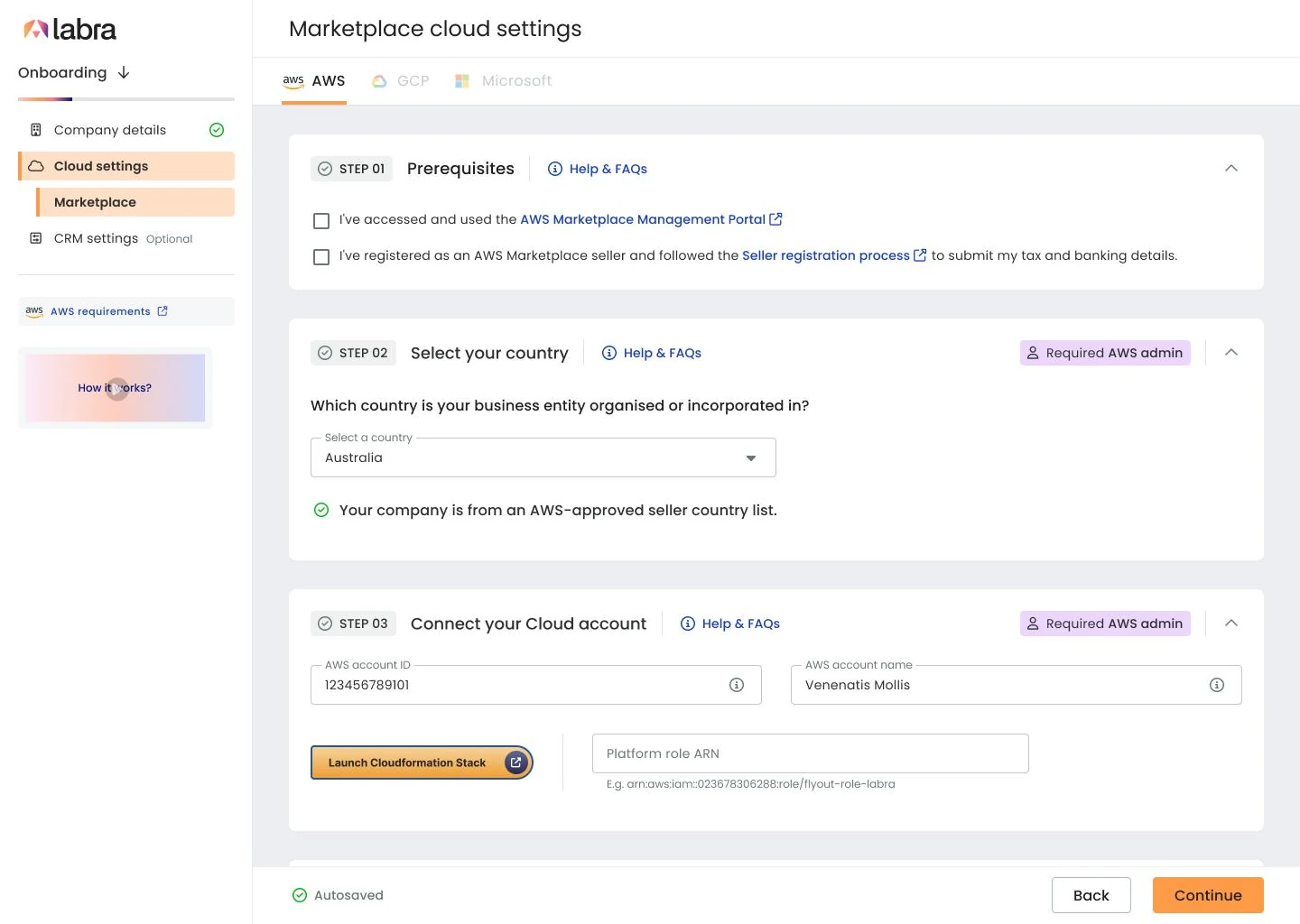
02Preventing errors before they happen

Error prevention > error handling.

Marketplace cloud settings — prerequisites, country validation and role badges
01

Prerequisites are Step 01, not buried in docs

Users confirm readiness before they begin.

02

Clarity of who in the org needs to do what.

03

Error prevention > error handling.

Inline validations, strict checks, and clear error states, no surprise failures at the end.

04

Autosave & draft support.

Users could safely pause and resume without fear of losing progress.

03Teaching inside the product

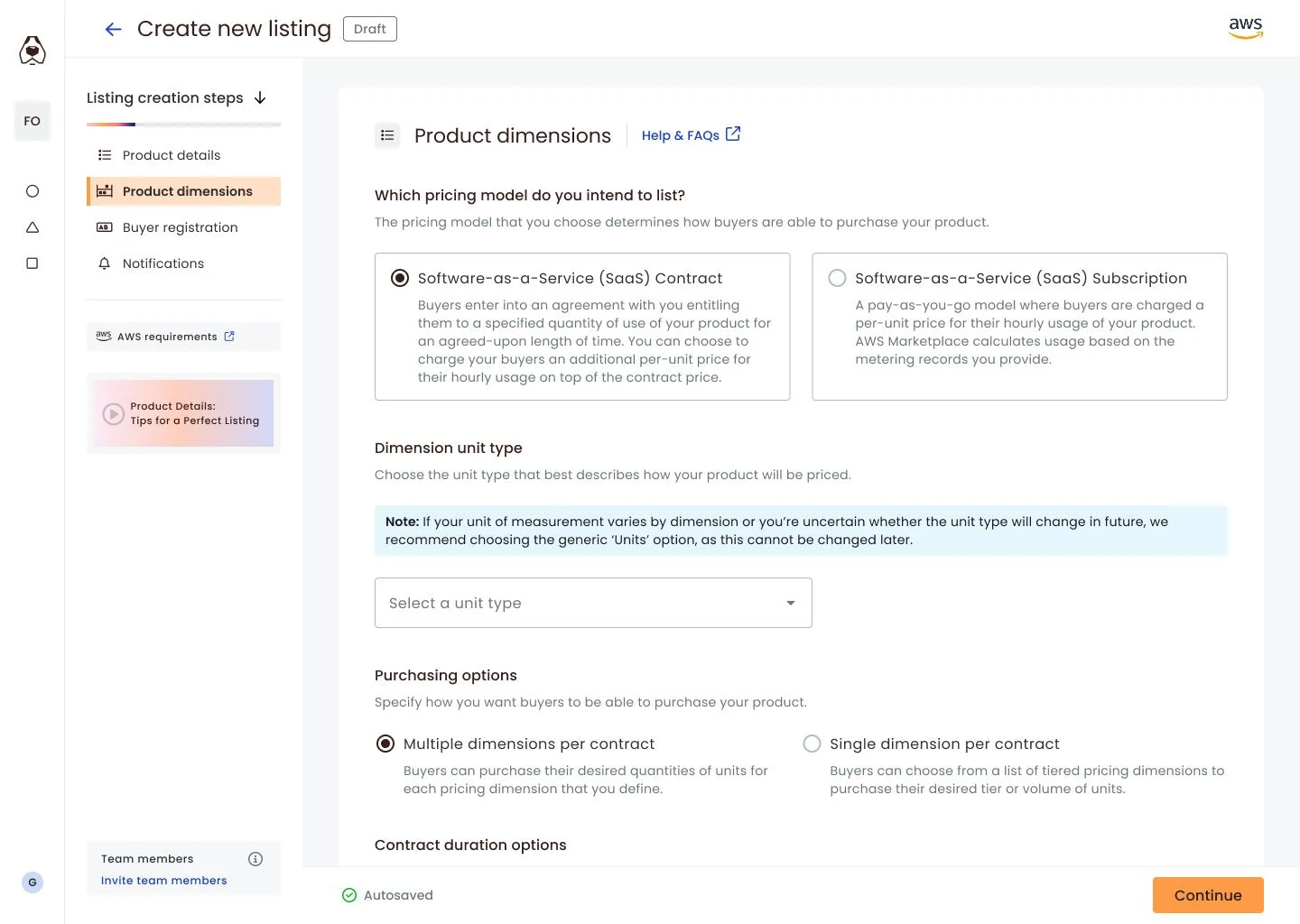
Users no longer needed external AWS docs to proceed. CS involvement dropped sharply.

Product dimensions step with an inline Note callout and Help & FAQs
01

Inline education & contextual help

AWS jargon was explained where it appeared, using tooltips, inline descriptions, and help sections (videos, demos, documentation).

02

“Note:” callouts whenever needed to prevent the common mistake.

03

Scoped Help & FAQs

Anchored at the section header, not the page header. So help is tied to the specific decision being made.

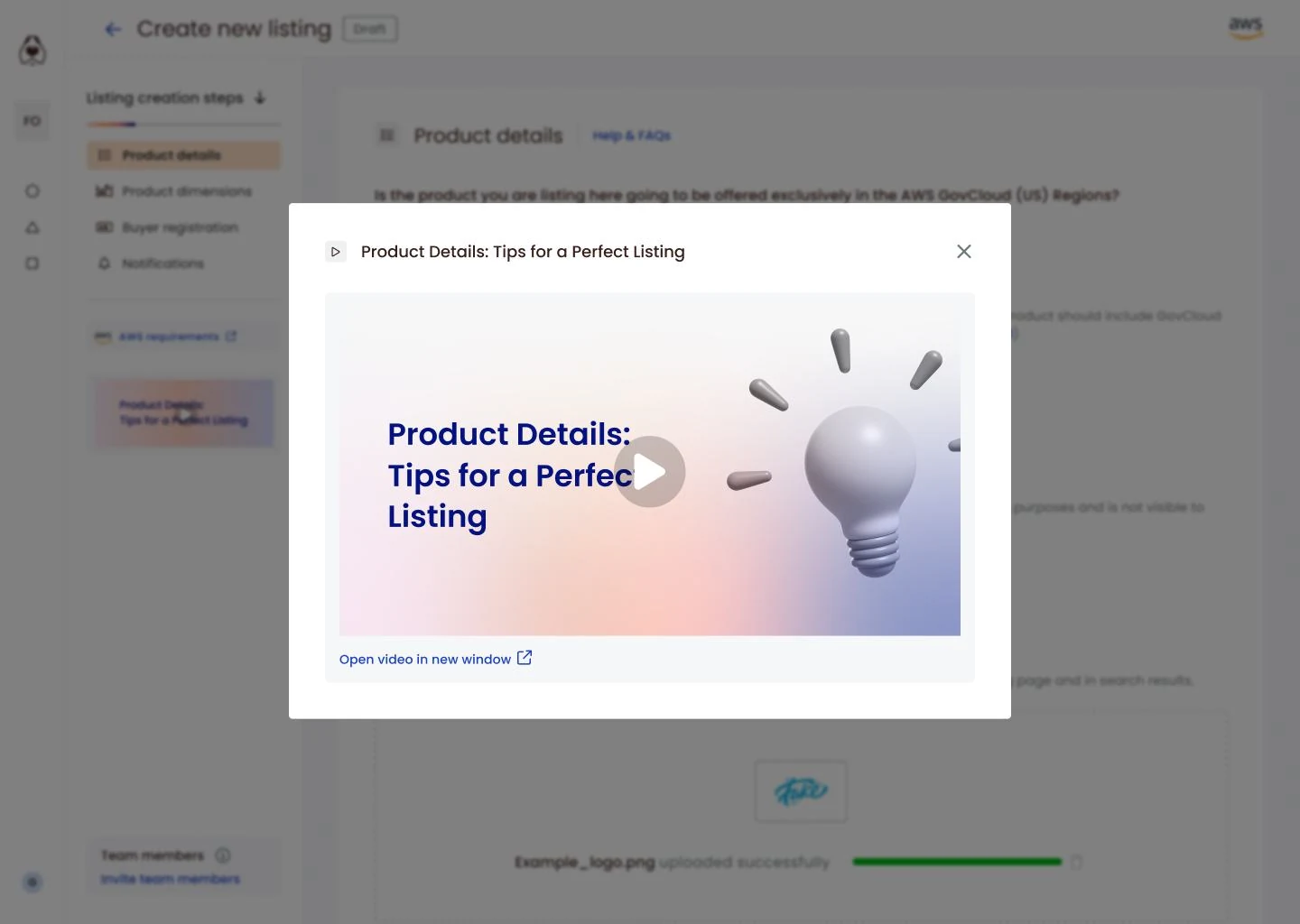
Contextual video — Product Details: Tips for a Perfect Listing

Contextual video where it's relevant

For users who want a walkthrough instead of reading.

04One framework, many contexts

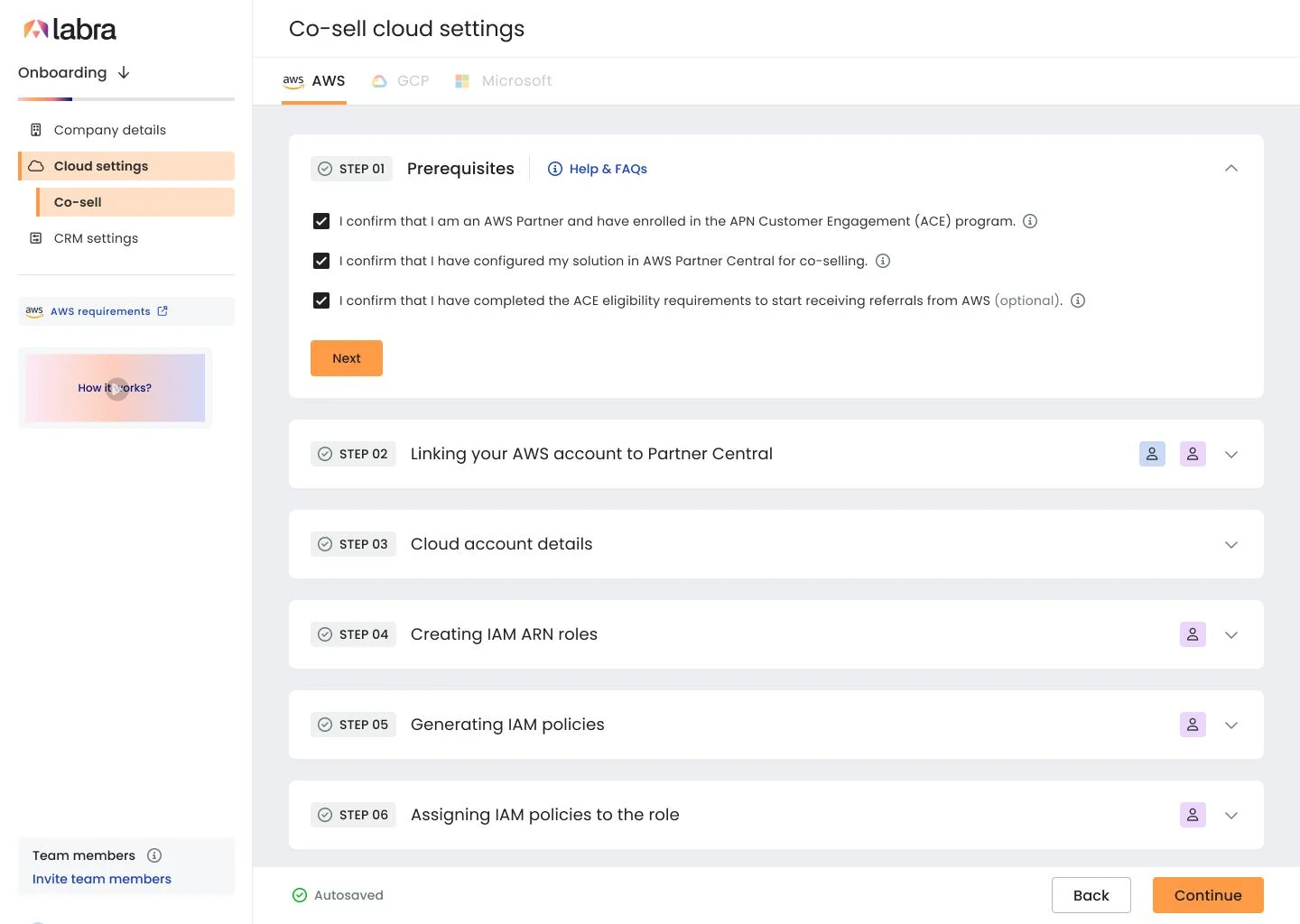
Support multiple listing types with one framework. Modular, reusable steps and components instead of bespoke flows for Onboarding, Listings, Co-sell, and CRM.

Co-sell cloud settings — same stepper with role icons per step
01

Same stepper, same autosave, same help pattern

Users who learned onboarding already know how to use co-sell. One mental model, many modules.

02

Role icons per step

Tell users who completes what before they start.

03

Step-level prerequisites mirror onboarding.

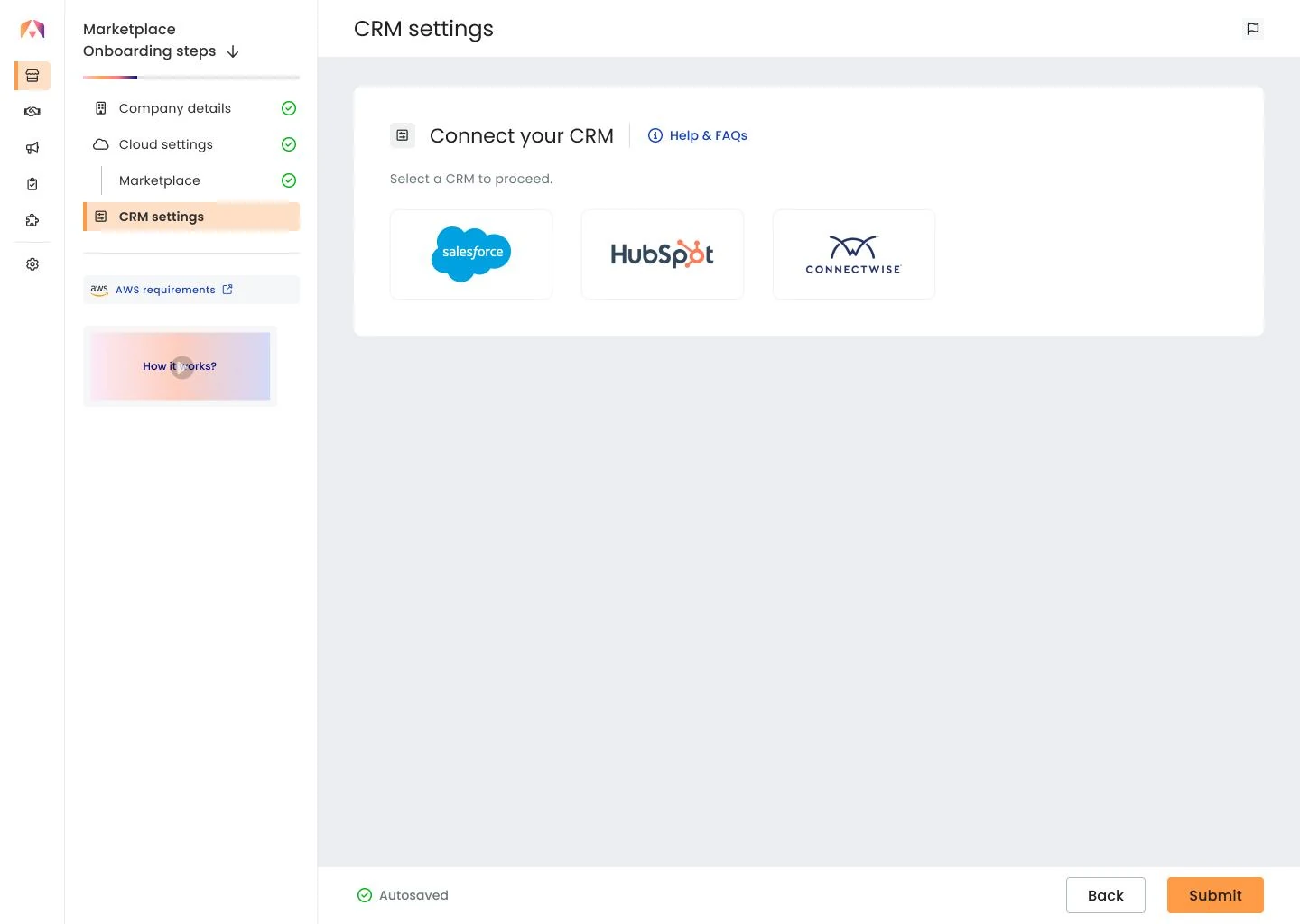
CRM settings — the same framework applied to CRM integration
01

Same framework applied to CRM integration.

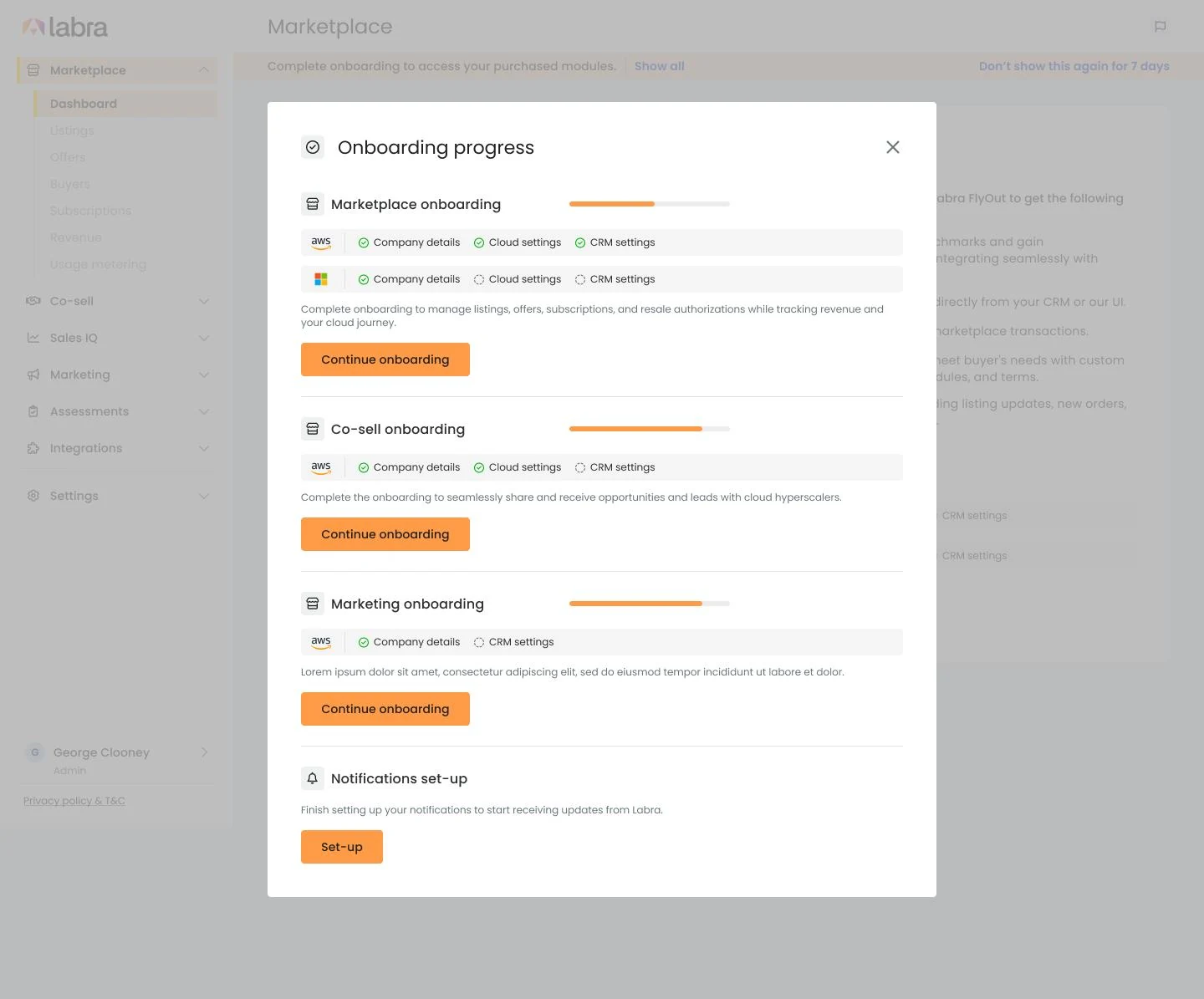
Onboarding progress — per-module progress bars and multi-cloud badges
01

Progress bars per module

Users always know where they left off across Marketplace, Co-sell, and Marketing.

02

Multi-cloud badges on each module. AWS, GCP, Microsoft.

05AI embedded in the flow

Generative AI integration wherever possible to make life easier.

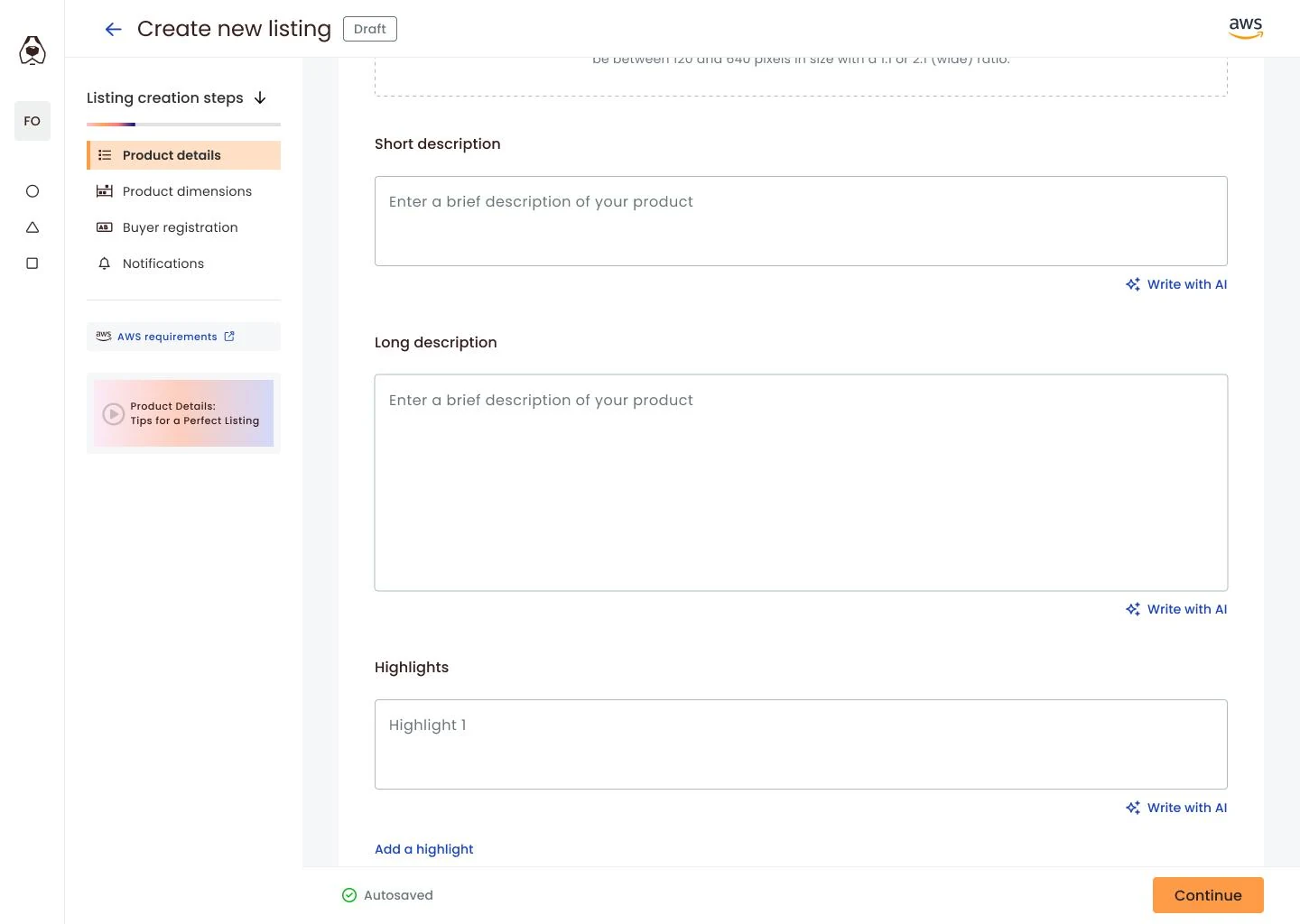
Write with AI inline on every description field

“Write with AI” inline on every description field.

Drafts generated from product details already filled in.

The system uses context the user has already provided rather than asking them to start over in a prompt.

Impact

A process that used to take 2-3 months became completable in under a week, mostly self-serve, without hand-holding.

Before
2-3 months to get listed, with heavy support involvement
Listing rejections and the loop used to start again
Users used to drop at onboarding
CS sat with customers for days or weeks per listing
PMs attended every customer call as mandatory participants
Developers pulled in to explain random things in real time
Product team constantly teaching CS what to do
After
Under a week in ideal conditions, mostly self-serve
Almost zero listing rejections ( Prerequisites and validations)
Higher onboarding completion rates
CS involvement: a few combined hours per week total
PMs rarely needed on customer calls
Product answered questions before they were asked
CS handled questions independently

My role was to lead the design, but what we shipped was a team effort, built alongside the founders, product managers, and engineers who pushed on it with me.

AI opportunities
Near-term

AI-Powered Readiness Assessment

Instead of a static prerequisites checklist, an AI layer scans what a customer has already configured and generates a personalised readiness report: what's missing, in what order to fix it, how long each step takes.

Cross-Marketplace Adaptation

AI that takes a completed AWS listing and automatically adapts it for Azure and GCP, different schemas, terminology, and compliance rules, reducing a weeks-long process to review-and-confirm.

Long-term

Conversational Listing Creation

A user describes their product in natural language and AI drafts the full listing structure, selects the appropriate type, and surfaces missing information in one pass. The form becomes a dialogue.

Automated Compliance Monitoring

AI that monitors policy changes across AWS, Azure, and GCP and proactively flags which active listings are affected, turning compliance from a reactive scramble into a continuous managed process.

Multi-Stakeholder Coordination Agent

An AI agent that tracks what information is missing, knows who owns it, and nudges the right person at the right time. Directly addresses the coordination bottleneck that was one of the core constraints of this project.

Reflection
01

Too many people were involved. Too many people were working on daily listings and we had to incorporate everyone's feedback, which created a lot of chaos. We needed a better, structured way to coordinate with everyone — not taking on too much feedback, but also not letting things fall through the cracks.

02

I would standardise user education better if I were to recreate the entire flow. Right now, the flow has inline descriptions, tooltips, videos, a right-side drawer with additional help documents, and external Labra docs on top of everything. That's a lot for users. I would standardise on one or two methods and use those consistently throughout.